
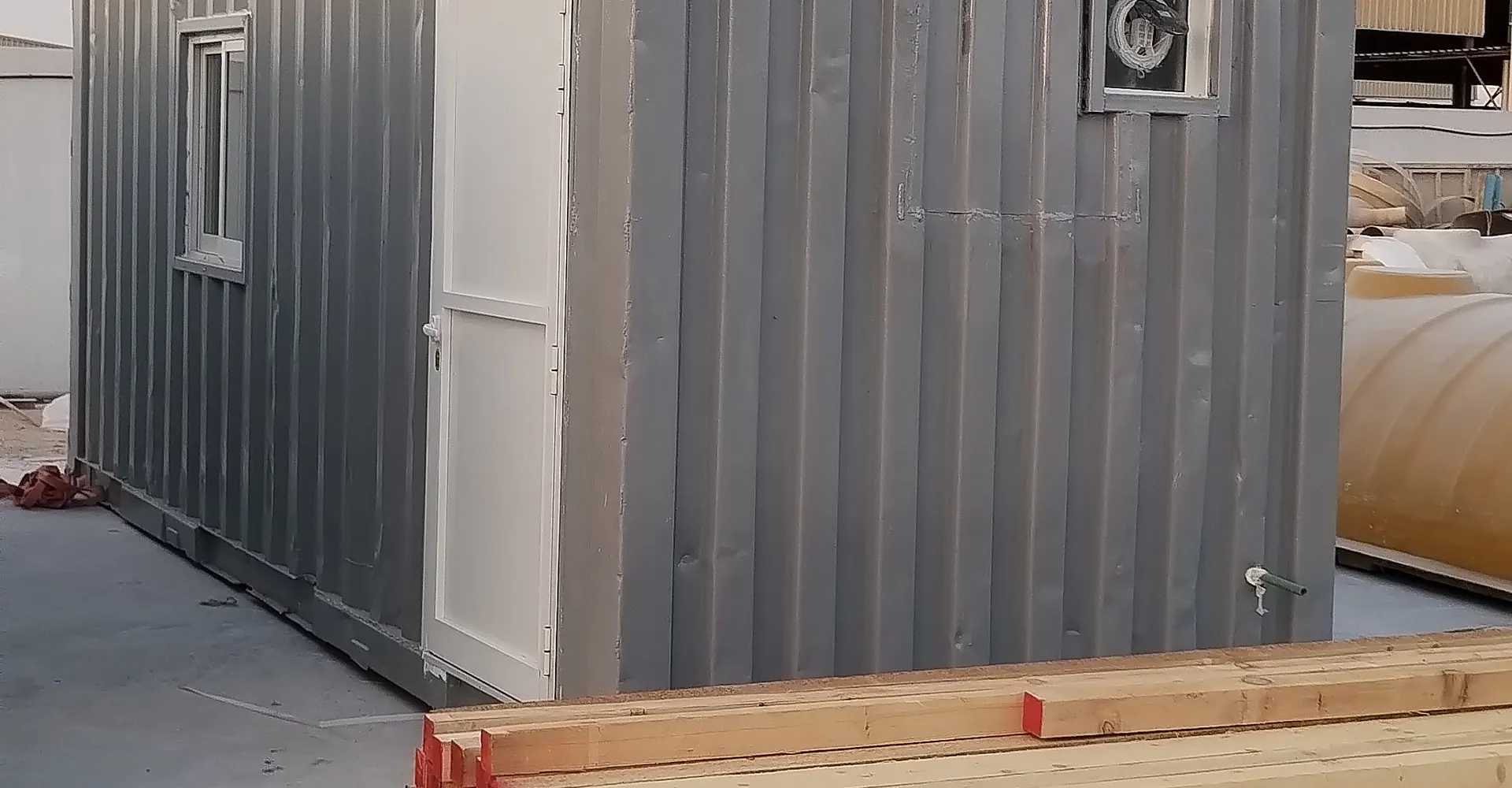
- What it is
- Insulating steel shipping containers and portable cabins to control heat gain and condensation.
- Best for
- Site offices, labour accommodation, storage, workshops, guard rooms and cold storage containers.
- Key benefit
- Comfortable interiors, lower AC loads and no dripping condensation.
- Sizes
- 20 ft, 40 ft, high-cube and custom cabins
- Where we work
- Dubai, Abu Dhabi, Sharjah, Ajman, Umm Al Quwain, Ras Al Khaimah and Fujairah
- Next step
- Free site inspection and a written, itemised quotation
Container insulation in the UAE for site and storage use
ESA Technical Services LLC is a Dubai-based technical services company, established in 2006, specialising in GRP works, waterproofing, insulation and installation across the UAE. Container insulation in the UAE is a practical service we provide to contractors, logistics companies and businesses using steel containers as offices, accommodation or storage.
Steel conducts heat very well. In summer, container walls and roofs get hot enough to burn, and interiors overheat without enormous AC capacity. At night and in humid conditions, the steel cools and condensation forms inside, dripping onto people, documents and stock and corroding the container from within.
What is container insulation?
Container insulation is the application of a thermal insulation layer, typically spray PU foam or insulated panels, to the inside (or outside) walls, roof and sometimes floor of a steel container or cabin. It reduces heat transfer through the steel and keeps inner surfaces above the dew point, which prevents condensation.
Spray PU foam is popular because it bonds directly to corrugated steel, fills the profile without gaps and adds some rigidity. It is then covered with an interior lining such as board or panels to meet fire and finish requirements. Panel systems with insulated cores are an alternative for fit-outs. Accommodation units must meet the applicable fire and Civil Defence requirements.
When do you need container insulation?
These are the signs and project triggers we see most often on UAE sites:
- Site offices. For project teams through UAE summers
- Labour accommodation units. Comfortable, efficient living spaces
- Storage containers. Protecting temperature-sensitive goods and documents
- Workshops and guard rooms. Usable year-round
- Cold storage containers. Improving or repairing insulation
- Condensation problems. Dripping, rust and mould inside units
Our step-by-step container insulation process
Assessment
We check the container's condition, openings, intended use and whether insulation goes inside or outside.
Preparation
Rust is treated and surfaces cleaned and dried. Windows, doors, vents and electrical conduits are planned and masked.
Insulation
PU foam is sprayed to the designed thickness on walls and roof (and floor if required), or insulated panels are installed.
Thickness check
Thickness is verified across surfaces, including the corrugation ribs and corners.
Interior lining
Lining boards or panels are fitted to cover and protect the foam, with a fire-appropriate finish.
Finishing and ventilation
Trims, openings, AC sleeves and ventilation are completed to manage internal humidity.
Handover
The unit is cleaned and ready for fit-out or use.
Technical specifications
Values below are typical ranges. Final specifications are confirmed per project from drawings, operating conditions and the manufacturer's technical data sheets.
| Parameter | Typical specification |
|---|---|
| Container types | 20 ft, 40 ft, high-cube, portable cabins |
| Insulation | Spray PU foam (closed-cell) or insulated panels |
| Typical thickness | Often ~40–75 mm, per use and target |
| Condensation control | Continuous insulation; ventilation and AC design |
| Interior lining | Board or panels per fire and finish requirements |
| External option | Reflective roof coating to reduce solar gain |
Materials and methods
- PU spray foam: closed-cell, bonded to steel
- Rust treatment and primers: before insulation
- Lining boards/panels: per use and fire requirement
- Reflective coatings: optional external roof coating
Benefits of container insulation
Comfortable interiors
Far less heat radiating from walls and roof.
Smaller AC, lower bills
Reduced cooling load for the same comfort.
No condensation drips
Protects people, electronics, documents and stock.
Less internal corrosion
Dry inner surfaces extend container life.
Quick turnaround
Most units are insulated in a day or two.
Ready for fit-out
A lined, finished interior.
Applications across the UAE
| Sector | Typical application | Why it fits |
|---|---|---|
| Construction | Site offices, meeting rooms | Productive year-round |
| Accommodation | Labour camps and staff housing | Liveable conditions |
| Logistics & retail | Storage containers | Protects goods |
| Events & pop-ups | Container kiosks and shops | Comfort for staff and customers |
| Cold chain | Cold storage containers | Maintains temperatures |
Quality control and safety
- Rust treatment and surface prep inspected
- Foam thickness measured at ribs, corners and roof
- Openings and services coordinated
- Lining installed per requirements
- Final inspection before handover
- Spray safety controls in enclosed spaces (ventilation, PPE)
Why choose ESA for container insulation
- Insulation specialists since 2006. UAE heat is our daily work
- Condensation know-how. We solve the drip, not just the heat
- Fast mobilisation. Units done quickly on site or in the yard
- Complete finish. Insulation plus lining
Container Insulation: frequently asked questions
What is the best insulation for a shipping container in the UAE?
Closed-cell spray PU foam is widely used because it bonds to the corrugated steel, fills gaps and controls condensation. It's then covered with a lining.
How thick should container insulation be?
Commonly around 40–75 mm, depending on use and AC plans. Offices and accommodation benefit from the higher end.
Can you stop condensation dripping inside my container?
Yes. Continuous insulation keeps the inner surface above the dew point. Ventilation and correct AC sizing complete the solution.
Can you insulate containers on site?
Yes. We insulate containers where they are, or at a yard before delivery, across the UAE.
Written by the ESA Technical Services teamLast updated: