
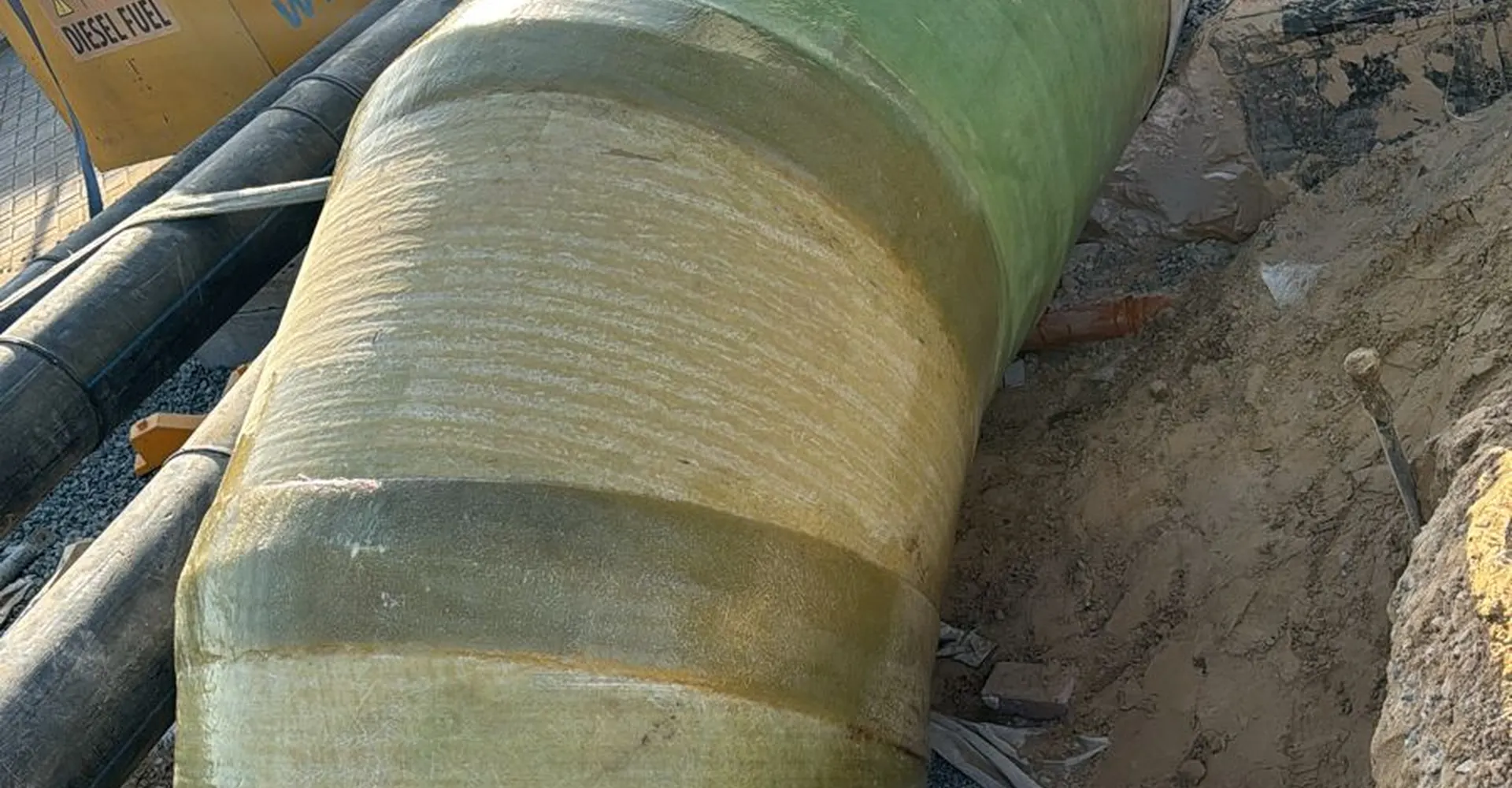
- What it is
- Joining GRP pipes and fittings on site by laminating glass-fibre reinforcement and resin over and inside the joint.
- Best for
- Tie-ins, closure pieces, fittings, branches and pipes without mechanical couplings.
- Key benefit
- A continuous, leak-tight joint with strength comparable to the pipe wall.
- Joint types
- Butt & wrap, laminated tees and branches, flange-to-pipe laminations
- Where we work
- Dubai, Abu Dhabi, Sharjah, Ajman, Umm Al Quwain, Ras Al Khaimah and Fujairah
- Next step
- Free site inspection and a written, itemised quotation
GRP pipe joint lamination in Dubai for new lines and tie-ins
ESA Technical Services LLC is a Dubai-based technical services company, established in 2006, specialising in GRP works, waterproofing, insulation and installation across the UAE. GRP pipe joint lamination in Dubai is specialist work that contractors hand to us because a poor joint can fail the whole hydrotest.
Laminated joints are used wherever pipes must be cut to length, where fittings are joined, where tie-ins are made to existing lines, and on systems designed without gasketed couplings. Unlike a mechanical coupling, the joint's strength comes entirely from workmanship, so method and inspection matter.
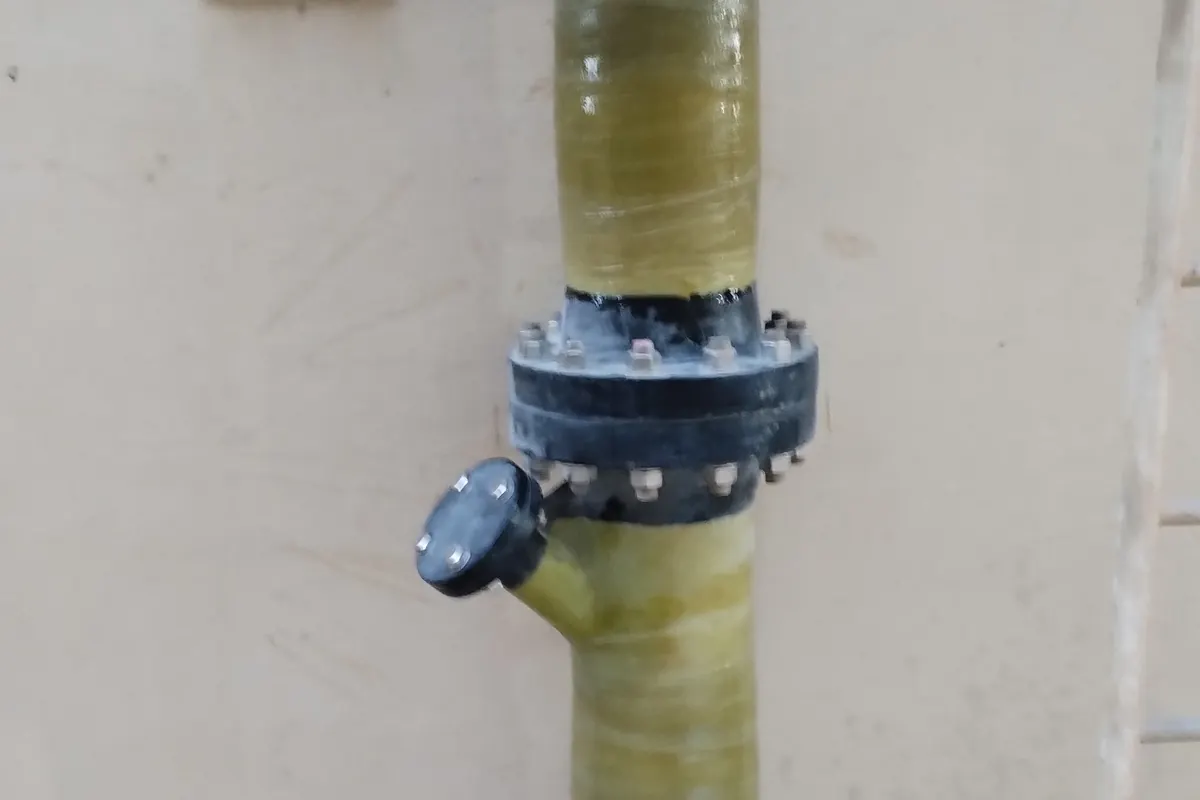
What is a butt & wrap joint in GRP pipes?
A butt & wrap joint joins two GRP pipe ends by butting them together and wrapping the joint with layers of glass-fibre reinforcement and resin that extend a set distance onto each pipe. Once cured, the laminate transfers pressure and axial loads across the joint, making a continuous, leak-tight connection.
The width and thickness of the wrap are not guesswork. They come from the pipe manufacturer's joint tables for each diameter and pressure class. On larger diameters that allow safe entry, an internal laminate is also applied to seal the inner surface and protect the cut edges from the fluid.
When do you need grp pipe joint lamination?
These are the signs and project triggers we see most often on UAE sites:
- Cut pipes and closure pieces. Where pipes are cut to fit and the factory joint is lost
- Fittings. Bends, tees, reducers and flanged spools joined to straight pipe
- Tie-ins. Connecting new lines to existing GRP networks
- Systems designed for laminated joints. Some process and above-ground systems specify butt & wrap throughout
- Repairs. Replacing a damaged spool with a new section joined by lamination
Our step-by-step grp pipe joint lamination process
Joint set-up
Pipe ends are cut square, aligned concentrically and gapped as required, then fixed so they can't move during lamination.
Surface preparation
The laminating zone on both pipes is ground to remove the gloss and expose fresh fibres over the full wrap width plus margin, then cleaned and kept dry.
Edge sealing and filling
Cut edges are sealed with resin, and the gap and any step between pipes are filled and faired so the wrap sits smoothly.
Internal lamination (larger sizes)
Where diameter and permits allow entry, the internal joint is laminated to seal cut edges and restore the chemical barrier.
External wrap
Reinforcement layers of increasing width are applied according to the joint table and fully wetted out, with air rolled out between layers to avoid voids.
Curing
The joint is shaded and cured. Catalyst dosage is adjusted for heat, and post-cure heating is applied when specified.
Inspection and testing
Wrap width, thickness and visual quality are measured and recorded. Once cured, the line undergoes hydrostatic testing.
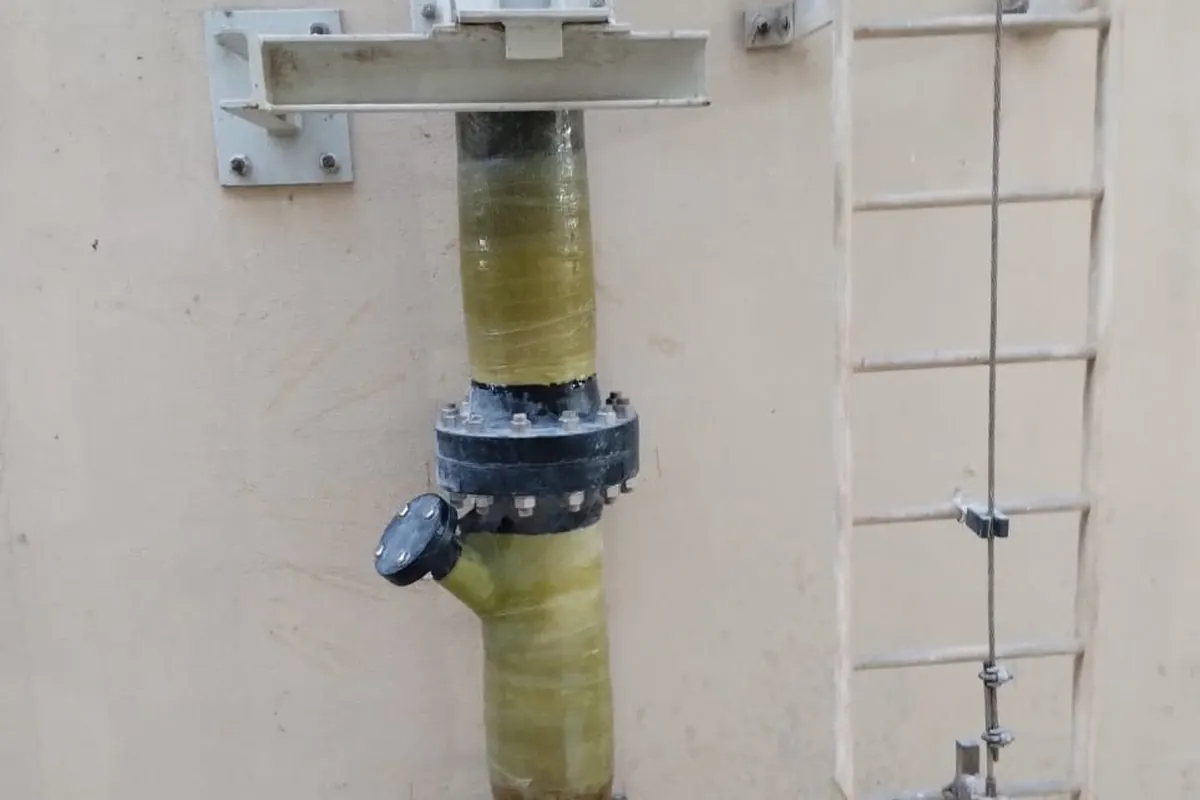
Technical specifications
Values below are typical ranges. Final specifications are confirmed per project from drawings, operating conditions and the manufacturer's technical data sheets.
| Parameter | Typical specification |
|---|---|
| Joint type | Butt & wrap (external), plus internal laminate on larger diameters |
| Wrap width and thickness | From the pipe manufacturer's joint tables by diameter and pressure class |
| Reinforcement | CSM and woven roving layers, staggered widths for tapered edges |
| Resin | Matched to the pipe resin system (isophthalic, vinyl ester, epoxy) |
| Surface preparation | Ground to fresh fibre over wrap width plus margin, dust-free, dry |
| Cure verification | Barcol hardness where specified; tack-free surface |
| Testing | Hydrostatic test of the completed line per specification |
Materials and methods
- Reinforcement kits: pre-cut mat and roving strips in the widths the joint table requires
- Resin systems: same family as the pipe to ensure chemical compatibility and bond
- Filler and putty: resin-based putty for filling gaps and steps between pipe ends
- Alignment clamps and shading: to hold geometry and protect curing laminates from direct sun
Benefits of grp pipe joint lamination
Leak-tight and continuous
A laminated joint has no gasket to age or dislodge. Correctly made, it becomes part of the pipe.
Strength matched to the pipe
Built to the manufacturer's table, the joint carries the pressure and axial loads it was designed for.
Flexible on site
Butt & wrap lets pipes be cut to fit and fittings be placed exactly where needed.
Chemical resistance
Internal lamination seals cut edges so the fluid never reaches exposed glass fibres.
Fewer hydrotest failures
Disciplined preparation and layup mean the line passes its pressure test first time.
Traceable quality
Each joint is recorded with dimensions, materials and inspection results.
Applications across the UAE
| Sector | Typical application | Why it fits |
|---|---|---|
| Utilities | Tie-ins and closures on water and sewage mains | Exact fit where couplings won't work |
| Industrial plants | Process and chemical lines with fittings | Chemical-resistant internal seal |
| District cooling | Condenser water headers and branches | Strong, leak-tight joints on large diameters |
| Desalination | Brine and seawater lines | Vinyl ester joints for saline service |
| Buildings | Plant-room GRP pipework | Clean, compact joints |
Laminated joint vs gasketed coupling
| Factor | Butt & wrap (laminated) | Gasketed coupling / bell & spigot |
|---|---|---|
| Installation speed | Slower (lay-up + cure) | Fast |
| Flexibility of layout | High (cut anywhere) | Limited to standard lengths |
| Axial restraint | Restrained (continuous) | Unrestrained unless special joint |
| Workmanship sensitivity | High | Moderate |
| Typical use | Fittings, tie-ins, closures, process lines | Straight runs of buried pipe |
Quality control and safety
- Joint alignment and gap checked before lamination
- Preparation zone width and surface condition inspected
- Layer sequence checked against the joint table
- Thickness and width measured after cure
- Visual check for voids, dry fibres and edge lift
- Hydrostatic test and joint register at handover
Why choose ESA for grp pipe joint lamination
- Laminators trained on joint tables. We follow the numbers, not habit
- Hot-climate curing control. Batch sizes and catalyst adjusted for UAE temperatures
- Internal lamination capability. Confined-space-trained crews for large diameters
- Since 2006. Nearly two decades of GRP pipework in the UAE
GRP Pipe Joint Lamination: frequently asked questions
How long before a laminated joint can be pressure tested?
Once the laminate has reached adequate cure, which depends on resin, temperature and thickness. In UAE conditions this is often within hours to a day, but we confirm cure with hardness checks before testing.
Why do butt & wrap joints fail?
Common causes are poor surface preparation, contamination or moisture, too few layers or insufficient width, voids from poor wet-out, and cure problems in extreme heat. Our method and inspections target each of these.
Can you joint GRP to steel or other materials?
Transitions are usually made with flanges or special adaptors rather than direct lamination. We'll advise the right detail for your system.
Do you laminate joints inside the pipe?
Yes, on diameters large enough for safe man-entry and with confined-space controls in place.
Written by the ESA Technical Services teamLast updated: