
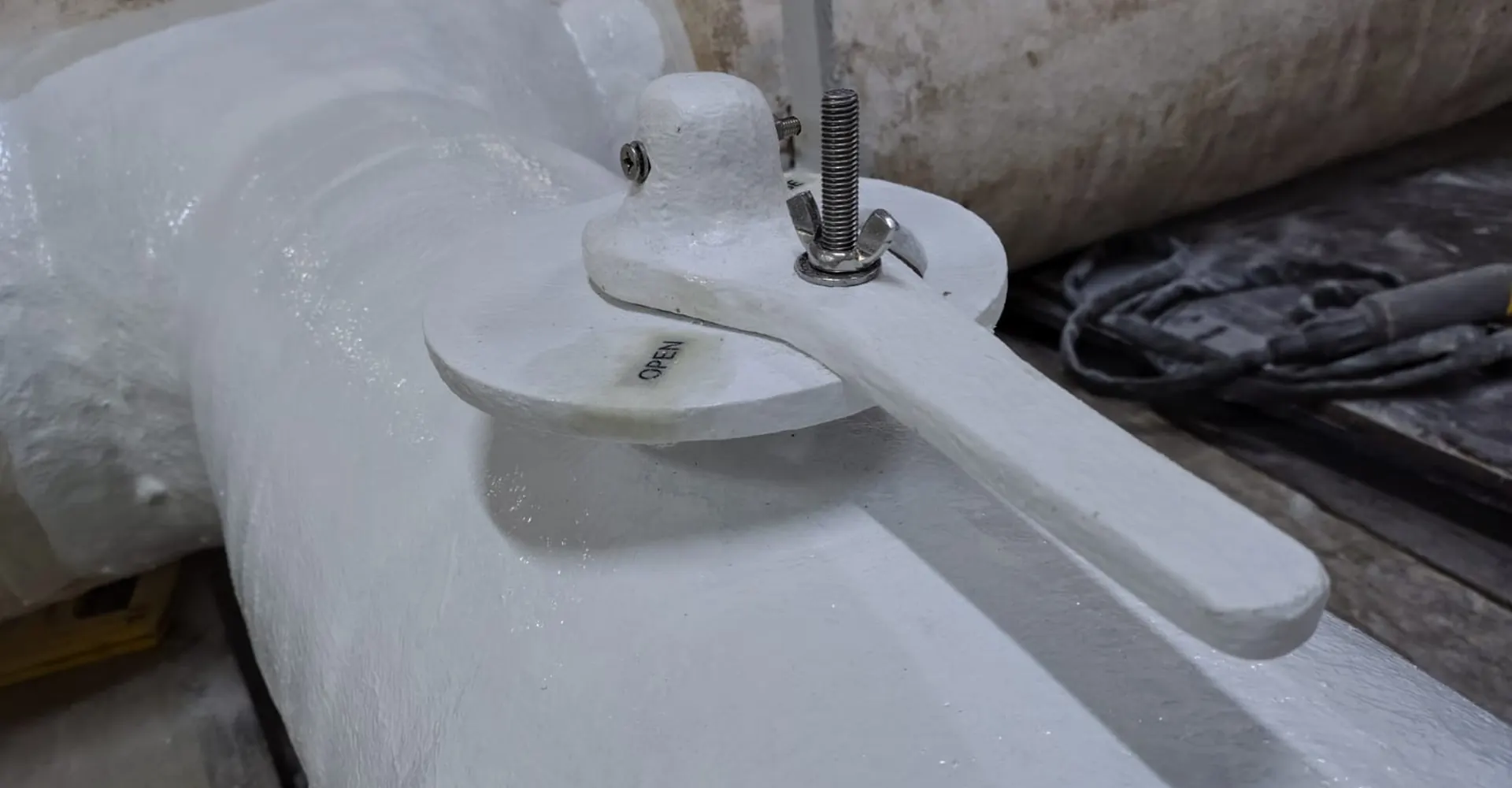
- What it is
- Installing dampers made of glass-reinforced plastic to control or isolate air flow in corrosive ventilation and fume systems.
- Best for
- Fume extraction, odour control, scrubbers, laboratories, chemical plants and sewage treatment.
- Key benefit
- Corrosion-resistant flow control that doesn't seize.
- Types
- Butterfly (single blade) and multi-blade (louvre) dampers
- Where we work
- Dubai, Abu Dhabi, Sharjah, Ajman, Umm Al Quwain, Ras Al Khaimah and Fujairah
- Next step
- Free site inspection and a written, itemised quotation
GRP damper installation in the UAE
ESA Technical Services LLC is a Dubai-based technical services company, established in 2006, specialising in GRP works, waterproofing, insulation and installation across the UAE. GRP damper installation in the UAE supports industrial, utility and laboratory clients whose air streams would destroy steel components.
Odour-control systems at sewage plants handle hydrogen sulphide. Chemical and laboratory extracts carry acids and solvents. Coastal humidity adds to the attack. GRP (also called FRP) dampers resist these conditions when the resin is matched to the chemistry.
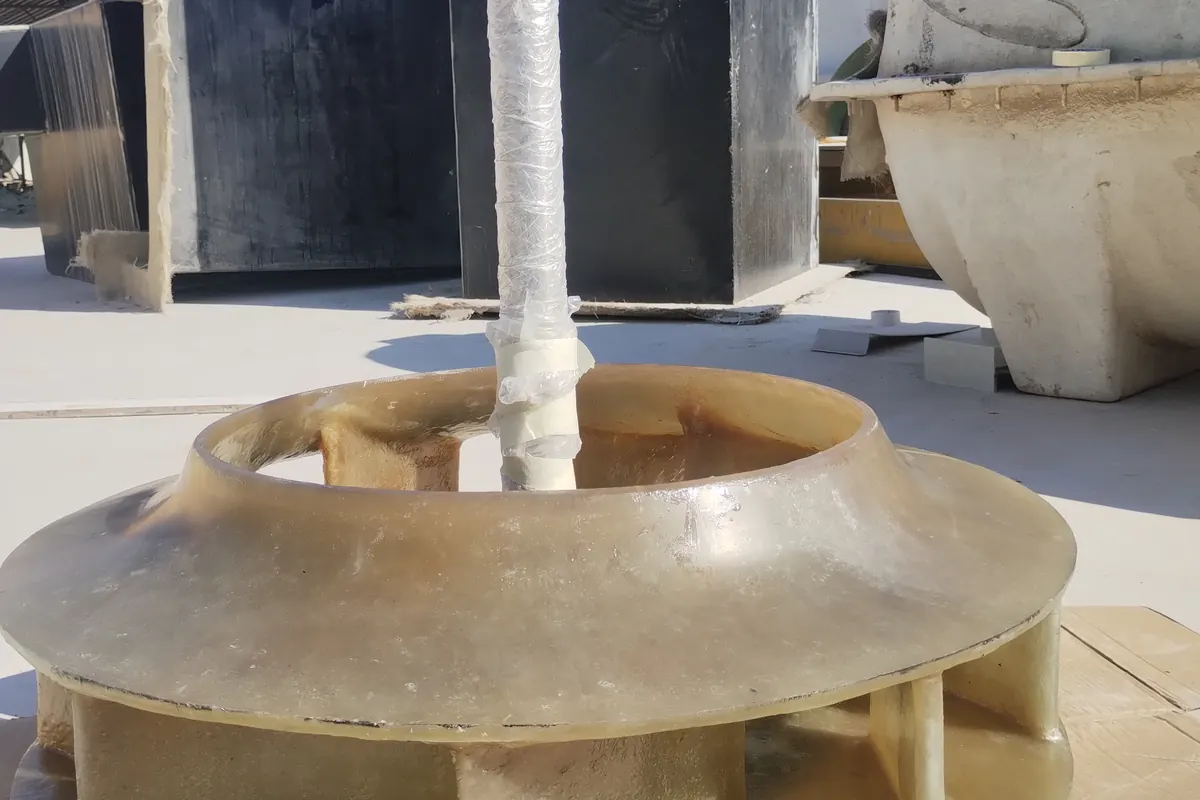
What is a GRP (FRP) damper?
A GRP or FRP damper is a flow-control device made from glass-reinforced plastic that is installed in ductwork to regulate, balance or shut off air or gas flow. A single butterfly blade or a set of louvres rotates on a corrosion-resistant shaft. Dampers can be manual (hand quadrant) or motorised with an actuator.
Materials matter throughout the damper. The body and blades are GRP, often with a vinyl ester resin and a chemical-resistant liner. Shafts, bearings and seals must be chosen for the chemistry too, for example corrosion-resistant alloy or encapsulated shafts and EPDM or fluoroelastomer seals as specified.
When do you need grp damper installation?
These are the signs and project triggers we see most often on UAE sites:
- New fume or odour-control systems. Installed with GRP ductwork
- Replacing corroded steel dampers. That have seized or perforated
- Balancing and isolation. Branch control in extract systems
- Scrubber inlets and outlets. Isolation for maintenance
- Laboratory extracts. Chemical-resistant control
Our step-by-step grp damper installation process
Specification check
We confirm size, type (butterfly or multi-blade), pressure class, resin, shaft and seal materials, and actuator requirements with your designer or supplier.
Site survey
Duct sizes, flange drilling, access for operation and maintenance, and support points are verified on site.
Isolation and access
Systems are shut down and isolated. Where hazardous gases are possible, gas testing and permits are in place.
Installation
The damper is positioned, aligned and bolted between flanges with gaskets, or laminated into GRP ductwork where specified.
Supports
Independent supports are provided so duct loads don't pass through the damper body.
Actuator and controls
Manual quadrants or actuators are fitted and set, with electrical connections by the controls contractor where applicable.
Function test
Blades are stroked through full travel, and open/close positions and seals are checked. Leakage testing is done where specified.
Technical specifications
Values below are typical ranges. Final specifications are confirmed per project from drawings, operating conditions and the manufacturer's technical data sheets.
| Parameter | Typical specification |
|---|---|
| Types | Butterfly (round), multi-blade/louvre (rectangular) |
| Body and blades | GRP/FRP, vinyl ester or as specified, with chemical liner |
| Shafts and bearings | Corrosion-resistant alloy or encapsulated, per chemistry |
| Seals | EPDM, fluoroelastomer or as specified |
| Operation | Manual quadrant, electric or pneumatic actuator |
| Connections | Flanged with gaskets, or laminated to GRP duct |
Materials and methods
- FRP dampers: from specialist fabricators to the project specification
- Gaskets and fasteners: chemically compatible, corrosion-resistant
- Support steel: GRP or protected steel supports
- Lamination materials: for laminated connections into GRP ductwork
Benefits of grp damper installation
Corrosion-resistant
Withstands acids, H₂S and humid chemical air that attack steel.
No seizing
Blades keep moving because GRP and proper shafts don't corrode together.
Lightweight
Easier support and handling at height.
Compatible with FRP duct
Same material family, same chemical resistance.
Reliable control
Consistent balancing and isolation.
Long service
Lower replacement frequency in harsh systems.
Applications across the UAE
| Sector | Typical application | Why it fits |
|---|---|---|
| Sewage treatment | Odour-control and ventilation ducts | Handles H₂S |
| Chemical & petrochemical | Fume extraction, scrubbers | Acid-resistant |
| Laboratories | Fume cupboard extracts | Chemical resistance |
| Industrial | Plating, battery, process areas | Corrosive air control |
Quality control and safety
- Specification and materials verified on delivery
- Flange alignment and gasket seating checked
- Independent supports confirmed
- Full-travel function test
- Actuator end positions set
- Gas testing, isolation and work-at-height controls
Why choose ESA for grp damper installation
- FRP material knowledge. Resin and component compatibility understood
- Since 2006. Industrial GRP experience across the UAE
- Lamination capability. We can laminate dampers into GRP duct
- Shutdown planning. Work sequenced to your maintenance window
GRP Damper Installation: frequently asked questions
Why use GRP dampers instead of stainless steel?
In many chlorides, acids and H₂S environments, GRP with the right resin outlasts stainless steel and is lighter. For some solvents or high temperatures, other materials may be preferable, and we'll advise.
Can GRP dampers be motorised?
Yes. They can be fitted with electric or pneumatic actuators for automatic control.
Do you supply the dampers?
We install dampers supplied by the project or coordinate supply from specialist FRP fabricators.
What temperature can GRP dampers handle?
It depends on the resin system. Many vinyl ester systems handle elevated temperatures well within their rated limits. The designer specifies the resin for the duty.
Written by the ESA Technical Services teamLast updated: