
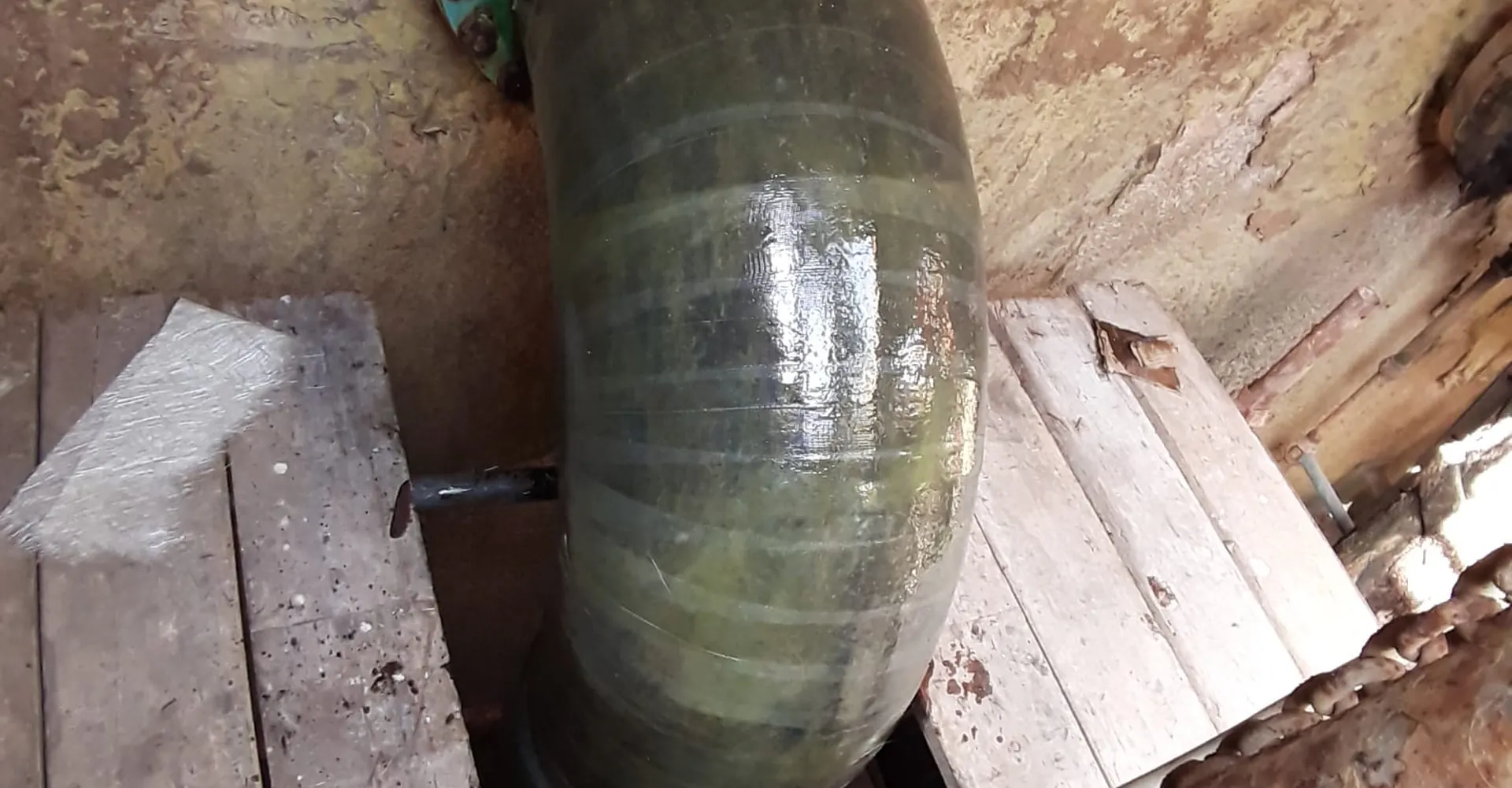
- What it is
- Building up layers of glass-fibre reinforcement and resin on a pipe to reinforce, protect or repair it.
- Best for
- Worn, thin, damaged or corroding pipe sections, and new pipes needing extra protection.
- Key benefit
- Restores strength and corrosion resistance without replacing the pipe.
- Substrates
- GRP pipes, and prepared steel or concrete where a GRP overlay is specified
- Where we work
- Dubai, Abu Dhabi, Sharjah, Ajman, Umm Al Quwain, Ras Al Khaimah and Fujairah
- Next step
- Free site inspection and a written, itemised quotation
GRP lamination services in the UAE for pipes and fittings
ESA Technical Services LLC is a Dubai-based technical services company, established in 2006, specialising in GRP works, waterproofing, insulation and installation across the UAE. Our GRP lamination services in the UAE reinforce and protect pipework for utilities, industry and buildings.
Lamination is a hands-on composite process. The result depends on surface preparation, resin chemistry, reinforcement layup and curing conditions. In UAE heat, resin gel times shorten dramatically, so catalyst levels, batch sizes and working hours must be adjusted. Our laminators do this every day.
What is GRP pipe lamination?
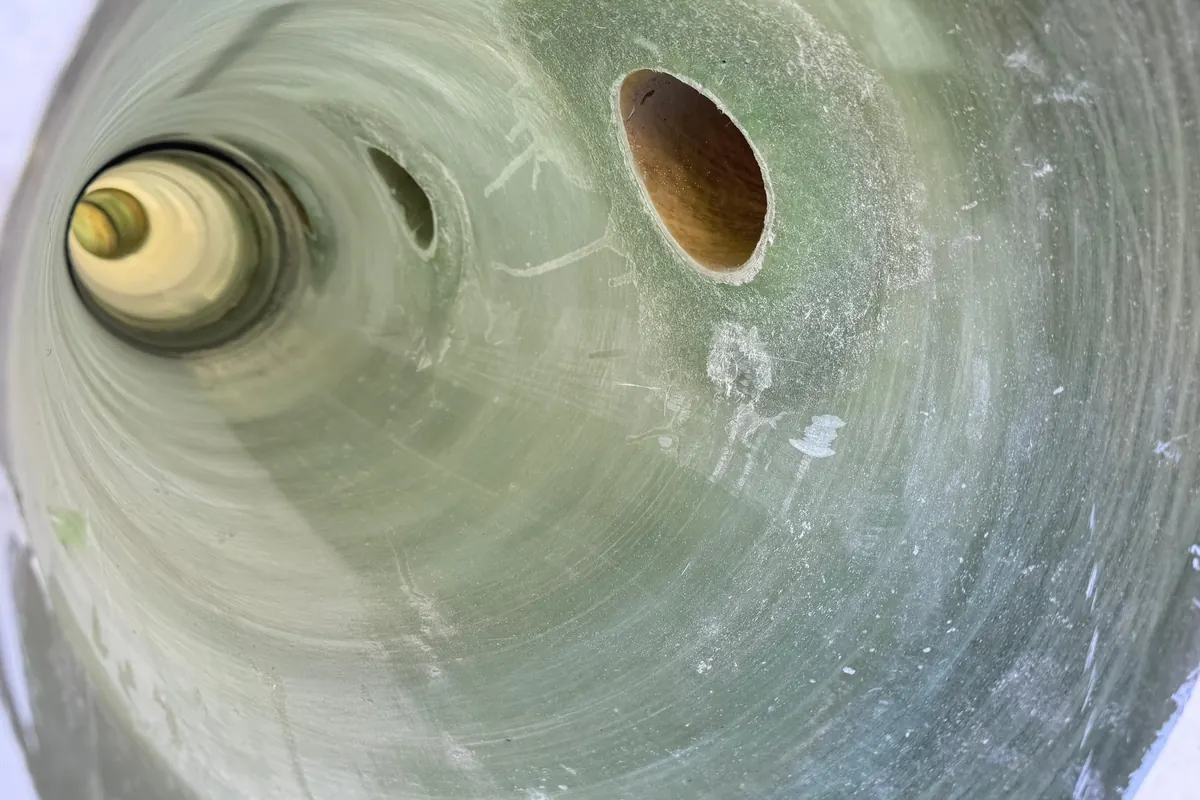
GRP pipe lamination is the application of successive layers of glass-fibre reinforcement (chopped strand mat and woven roving) wetted out with thermosetting resin onto a prepared pipe surface. When cured, the laminate forms a hard, bonded composite shell that adds structural strength and a corrosion-resistant barrier.
Lamination can be external, wrapping the outside of a pipe to reinforce it or protect it from soil, UV and chemical splash, or internal, lining the bore of large-diameter pipes that allow safe man-entry, to restore a corrosion barrier. A resin-rich inner layer, often reinforced with a surfacing veil, provides chemical resistance. The structural layers behind it carry the load.
When do you need grp pipe lamination?
These are the signs and project triggers we see most often on UAE sites:
- Loss of wall thickness. Abrasion, erosion or chemical attack has thinned the pipe wall
- Local damage. Impact damage, gouges or cracks from excavation or handling
- External corrosion risk. Pipes in splash zones, chemical areas or aggressive soils needing an extra protective layer
- Upgrading pressure or duty. A section needs reinforcing for new operating conditions, subject to engineering review
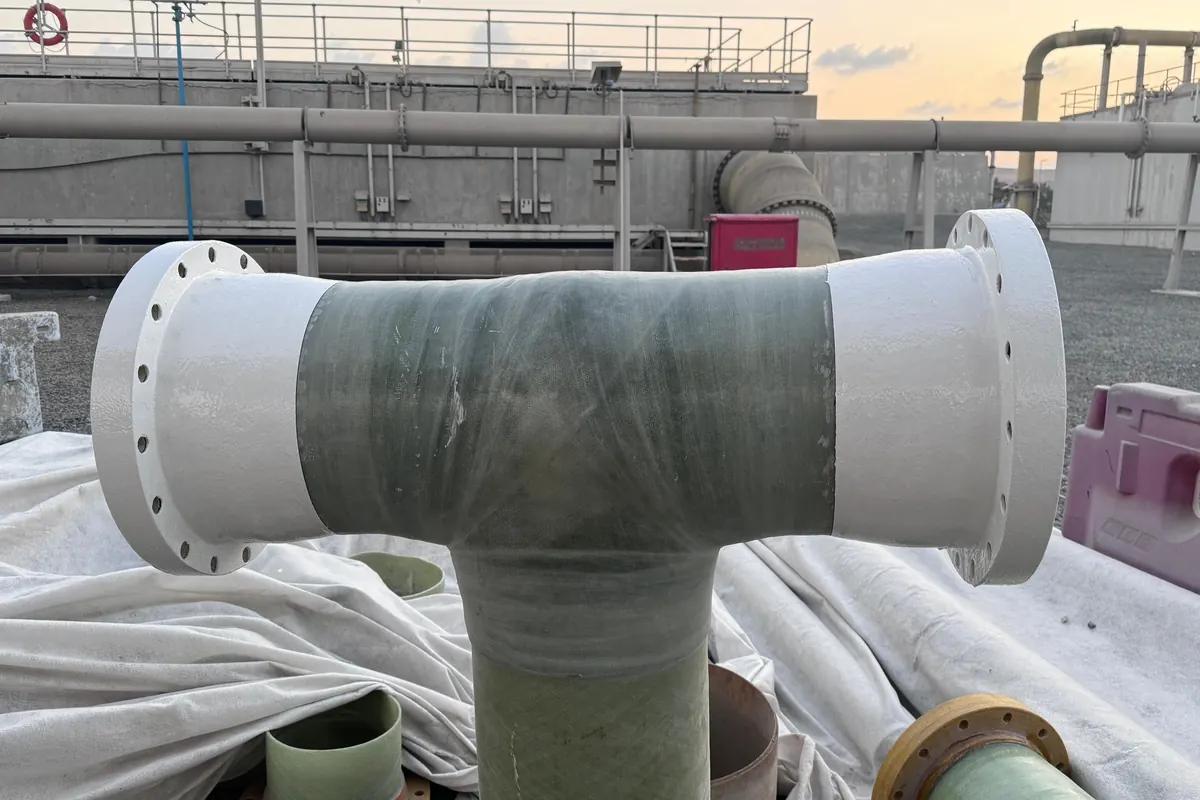
- Fittings and transitions. Tees, reducers and nozzles that need reinforcing or re-protecting
Our step-by-step grp pipe lamination process
Assessment
We inspect the pipe, measure remaining thickness where possible, identify the fluid, pressure and temperature, and confirm what the laminate must achieve.
Laminate design
Resin type, reinforcement sequence and total thickness are set from the pipe manufacturer's data or an engineered design, covering length, taper and overlap onto sound material.
Isolation and access
The line is isolated, drained and made safe. For internal work, confined-space permits, gas testing and ventilation are in place before entry.
Surface preparation
The surface is ground to remove gloss, contamination and damaged material, extended well beyond the repair zone, then cleaned. A properly abraded, dust-free surface is critical to bond.
Laminating
Reinforcement is laid up layer by layer and thoroughly wetted out, with air rolled out between layers. Edges are tapered so load transfers smoothly into the pipe.
Curing
The laminate cures under controlled conditions. We shade from direct sun, adjust catalyst levels for temperature, and apply heat for post-cure where specified.
Inspection and testing
We check thickness, dimensions, visual quality (no dry spots, blisters or delaminations) and cure (Barcol hardness where specified), then pressure test where the line allows.
Technical specifications
Values below are typical ranges. Final specifications are confirmed per project from drawings, operating conditions and the manufacturer's technical data sheets.
| Parameter | Typical specification |
|---|---|
| Reinforcements | Chopped strand mat (e.g. 300–600 g/m²), woven roving (e.g. 600–800 g/m²), combination mats |
| Surface layer | C-glass or synthetic surfacing veil for resin-rich corrosion barrier |
| Resins | Isophthalic polyester, vinyl ester (chemical/seawater/higher temperature), epoxy where specified |
| Curing system | MEKP or other catalyst with accelerator, dosed for ambient temperature |
| Thickness | Per design or manufacturer's tables for diameter and pressure class |
| Overlap onto sound pipe | Per design, with tapered edges |
| Cure verification | Barcol hardness against the resin supplier's value; acetone sensitivity check on surface |
| Reference practice | Pipe manufacturer's repair/joint manual; standards such as ISO 14692 or BS EN 13121 where specified |
Materials and methods
- Glass reinforcement: E-glass chopped strand mat and woven roving, with surfacing veil for chemical-facing layers
- Resin: matched to the original pipe resin and the service: isophthalic for general water, vinyl ester for aggressive media
- Top coat: wax-containing or UV-stabilised top coat on external laminates exposed to sun
- Preparation tools: grinders with appropriate discs, solvents for cleaning, and moisture meters where substrates may be damp
Benefits of grp pipe lamination
Avoids replacement
Laminating a section typically costs far less than excavating and replacing it, and avoids long shutdowns.
Corrosion barrier
A resin-rich surface layer protects against chemicals, seawater and aggressive soils.
Structural reinforcement
A correctly designed laminate restores or adds hoop and axial strength to damaged or thinned pipe.
Fast turnaround
Most external laminates can be applied and cured within a planned shutdown window.
Works on complex shapes
Hand lay-up follows tees, bends, nozzles and reducers where sleeves or clamps won't fit.
Weather protection
UV-stabilised top coats protect exposed pipes from sun damage.
Applications across the UAE
| Sector | Typical application | Why it fits |
|---|---|---|
| Industrial & petrochemical | Process lines, chemical drains, scrubber ducting | Vinyl ester resists aggressive media |
| Desalination & seawater | Intake, brine and outfall pipework | Seawater-resistant laminate, no corrosion |
| Utilities | Water and sewage lines with local damage | Repair in place without replacement |
| District cooling | Condenser water lines and fittings | Restores protection on ageing sections |
| Buildings | Plant-room GRP pipework and tank connections | Neat, fast reinforcement |
Lamination vs replacement
| Factor | GRP lamination | Section replacement |
|---|---|---|
| Cost | Usually lower | Higher (materials, excavation, reinstatement) |
| Downtime | Short, planned window | Longer shutdown |
| Excavation | Local access only | Full excavation of the section |
| When it's right | Pipe fundamentally sound, damage local | Pipe deformed, brittle or widely damaged |
Quality control and safety
- Surface preparation inspected before any resin is applied
- Resin and catalyst batch records; pot-life adjusted for ambient temperature
- Layer count and thickness measured against the design
- Visual inspection for dry spots, air voids, blisters and delamination
- Cure check by Barcol hardness where specified
- Confined-space, chemical handling and hot-work controls as applicable
Why choose ESA for grp pipe lamination
- Laminators with nearly two decades of UAE experience. We know how resins behave at 45°C and adjust accordingly
- Resin chemistry done right. We match the laminate to the pipe and the fluid
- Design-led. Thickness and overlap follow manufacturer data or engineering design
- Documented quality. Thickness, cure and test records at handover
GRP Pipe Lamination: frequently asked questions
How long does a GRP lamination repair last?
When the laminate is correctly designed, bonded to a properly prepared surface and matched to the service, it becomes part of the pipe and is designed to last for the pipe's remaining service life. Surface preparation and cure are the critical factors.
Can you laminate over a steel pipe?
GRP can be applied over properly prepared steel as a protective or reinforcing overlay where it has been engineered for that purpose. For insulated steel lines, see our MS pipe insulation with GRP lamination service.
Does the pipe need to be shut down?
For a permanent structural laminate, yes. The surface must be dry and the laminate must cure without pressure. We plan the work to fit a short shutdown window.
What is the difference between lamination and joint lamination?
Joint lamination (butt & wrap) specifically joins two pipe ends or fittings. General lamination reinforces or protects a length of pipe or a fitting. Both use the same materials and skills.
Written by the ESA Technical Services teamLast updated: